- 0
- 229 words
The final trend of our series is the transition from a “Linear” to a “Circular” Industrial Strategy. In 2026, waste is no longer a liability; it is a raw material.
1. Digital Product Passports (DPP)
Starting in April 2026, many industrial products now come with a Digital Product Passport. By scanning a QR code or NFC chip, a recycler can see the exact material composition of a part, its repair history, and instructions for safe disassembly. This ensures that valuable materials like cobalt and lithium are never thrown away.
2. Real-Time Material Accounting
AI platforms are now used to track the “Circularity Rate” of a company in real-time. Just as companies track their cash flow, 2026 firms track their “Material Flow,” identifying where products are being wasted and how they can be refurbished or remanufactured back into the supply chain.
3. Circularity as a Competitive Advantage
Driven by 2026 resource scarcity and geopolitical tensions, “Circularity” has moved from a sustainability report to a core business strategy. Companies that can reuse their own materials are proving to be more resilient to global supply shocks, making them the most stable and profitable players in the 2026 economy.
That completes the full 30-article series for Category 5!
We have covered the future of Quantum, Energy, 6G, Robotics, and Management. With these 30 articles, you now have a comprehensive content blueprint to establish techfestival.shop as a global thought leader in emerging technology.
Author

hq2026host4@gmail.com
Related Posts

The Sovereign AI Trend: Why Nations are Building Their Own LLMs
- 0
- 194 words
By April 2026, the era of relying solely on “Big Tech” for AI is ending. Countries like the Kyrgyz Republic, Saudi Arabia,...
Read out all
6G and the “Internet of Senses”: What to Expect by 2028
- 0
- 167 words
While we are in the peak of the 5G era in 2026, the 6G prototypes being tested today in China and the...
Read out all
The AI Agentic Mesh: How Autonomous Agents Coordinate the 2026 Smart Factory
- 0
- 203 words
In 2024, AI was a tool we used. In 2026, AI is a workforce. The “Agentic Mesh” is a decentralized network of...
Read out all
Human-Cobot Collaboration: The Symbiotic Rise of 2026
- 0
- 169 words
By April 2026, Collaborative Robots (Cobots) have moved beyond simple “pick and place” tasks. They are now industrial-grade partners capable of precision...
Read out all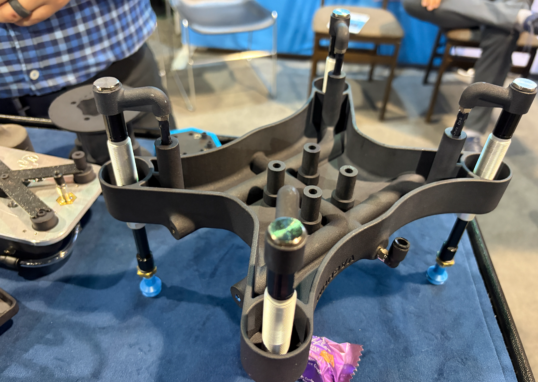
Additive Manufacturing at Scale: 3D Printing the 2026 Economy
- 0
- 173 words
After years of being a prototyping tool, 3D printing (Additive Manufacturing) has officially moved to mass production in 2026, with the global...
Read out all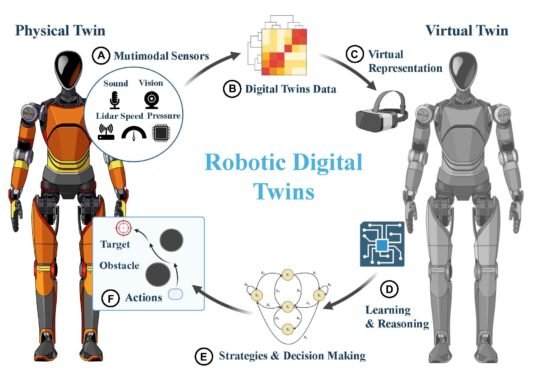
Digital Twin 2.0: From Simulation to Autonomous Decision-Making
- 0
- 181 words
Digital Twins in 2026 have reached “Level 3 Maturity.” They are no longer just 3D models; they are Live Biological Mirrors of...
Read out all