- 0
- 142 words
By mid-2027, the physical limits of Silicon (the “Boltzman Tyranny”) will be reached. The industry is pivoting to Alternative Substrates to keep Moore’s Law alive.
1. Photonic (Optical) Computing
Using light (photons) instead of electricity (electrons) to move data, 2027 chips will offer 100x the speed with 1% of the power consumption. This is critical for the massive energy demands of the AI Agentic Mesh we discussed in earlier articles.
2. Graphene Semiconductors
Following the breakthroughs of 2026 (Article 16), 2027 will see the first commercial Graphene-on-Silicon wafers. These chips can operate at much higher temperatures and frequencies, making them ideal for the extreme environments of space and heavy industry.
3. Neuromorphic Hardware
We are moving toward chips that physically mimic the human brain’s architecture. These chips “fire” only when needed, making them exponentially more efficient for “Edge AI” tasks like real-time facial recognition or autonomous drone navigation.
Author

hq2026host4@gmail.com
Related Posts

The Sovereign AI Trend: Why Nations are Building Their Own LLMs
- 0
- 194 words
By April 2026, the era of relying solely on “Big Tech” for AI is ending. Countries like the Kyrgyz Republic, Saudi Arabia,...
Read out all
6G and the “Internet of Senses”: What to Expect by 2028
- 0
- 167 words
While we are in the peak of the 5G era in 2026, the 6G prototypes being tested today in China and the...
Read out all
The AI Agentic Mesh: How Autonomous Agents Coordinate the 2026 Smart Factory
- 0
- 203 words
In 2024, AI was a tool we used. In 2026, AI is a workforce. The “Agentic Mesh” is a decentralized network of...
Read out all
Human-Cobot Collaboration: The Symbiotic Rise of 2026
- 0
- 169 words
By April 2026, Collaborative Robots (Cobots) have moved beyond simple “pick and place” tasks. They are now industrial-grade partners capable of precision...
Read out all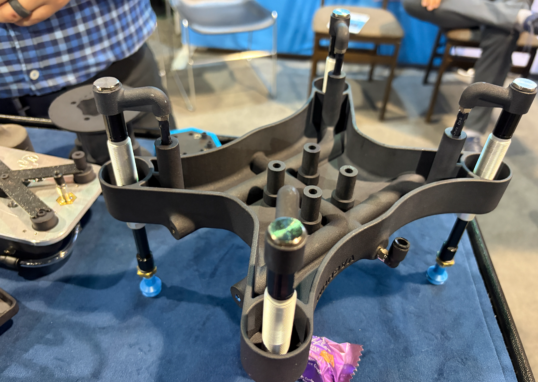
Additive Manufacturing at Scale: 3D Printing the 2026 Economy
- 0
- 173 words
After years of being a prototyping tool, 3D printing (Additive Manufacturing) has officially moved to mass production in 2026, with the global...
Read out all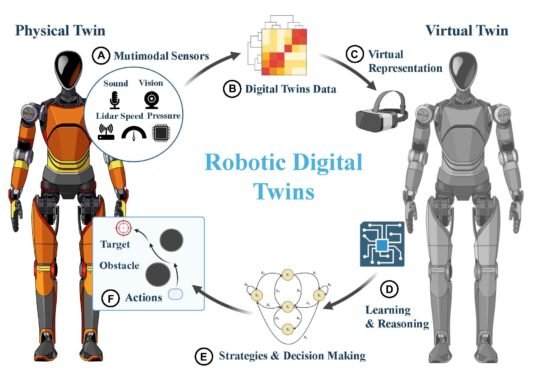
Digital Twin 2.0: From Simulation to Autonomous Decision-Making
- 0
- 181 words
Digital Twins in 2026 have reached “Level 3 Maturity.” They are no longer just 3D models; they are Live Biological Mirrors of...
Read out all