- 0
- 158 words
The 2026 “Smart Uniform” is a sophisticated piece of industrial hardware. These fabrics are no longer just about tracking steps; they are about Worker Protection and Performance.
1. Kinetic Energy Harvesting
Industrial workers in 2026 generate their own power. Smart fabrics in their boots and joints use Triboelectric Nanogenerators to convert the motion of walking into electricity, charging the worker’s communication devices and head-up displays (HUDs) automatically.
2. Fatigue and Vitals Monitoring
Integrated sensors in the fabric monitor heart rate, hydration, and muscle fatigue. If the AI detects that a worker is reaching a level of exhaustion that increases the risk of an accident, it sends a vibrating alert to their sleeve and notifies the supervisor to schedule a rest break.
3. Haptic Instruction
Smart gloves now use haptic feedback to “guide” workers through complex assemblies. If a technician reaches for the wrong bolt, the glove vibrates on the side of the correct tool, reducing the “training-to-floor” time for new employees by 60%.
Author

hq2026host4@gmail.com
Related Posts

The Sovereign AI Trend: Why Nations are Building Their Own LLMs
- 0
- 194 words
By April 2026, the era of relying solely on “Big Tech” for AI is ending. Countries like the Kyrgyz Republic, Saudi Arabia,...
Read out all
6G and the “Internet of Senses”: What to Expect by 2028
- 0
- 167 words
While we are in the peak of the 5G era in 2026, the 6G prototypes being tested today in China and the...
Read out all
The AI Agentic Mesh: How Autonomous Agents Coordinate the 2026 Smart Factory
- 0
- 203 words
In 2024, AI was a tool we used. In 2026, AI is a workforce. The “Agentic Mesh” is a decentralized network of...
Read out all
Human-Cobot Collaboration: The Symbiotic Rise of 2026
- 0
- 169 words
By April 2026, Collaborative Robots (Cobots) have moved beyond simple “pick and place” tasks. They are now industrial-grade partners capable of precision...
Read out all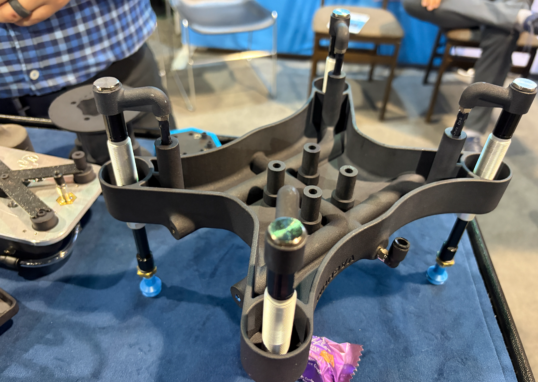
Additive Manufacturing at Scale: 3D Printing the 2026 Economy
- 0
- 173 words
After years of being a prototyping tool, 3D printing (Additive Manufacturing) has officially moved to mass production in 2026, with the global...
Read out all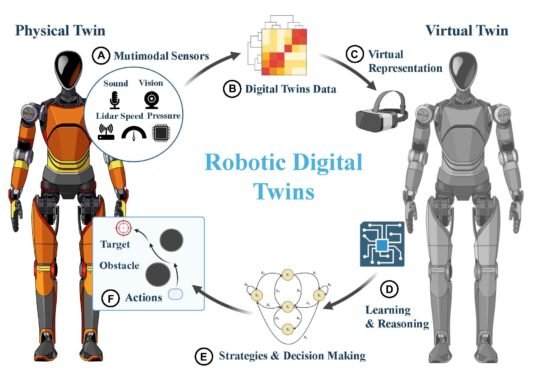
Digital Twin 2.0: From Simulation to Autonomous Decision-Making
- 0
- 181 words
Digital Twins in 2026 have reached “Level 3 Maturity.” They are no longer just 3D models; they are Live Biological Mirrors of...
Read out all