- 0
- 183 words
In 2026, the traditional “network perimeter” is dead. With workers, robots, and AI agents accessing data from everywhere, Identity has become the only true firewall.
1. Continuous Adaptive Authentication
The 2026 Zero-Trust model doesn’t just ask “Who are you?” once. It continuously monitors Risk Signals—such as your device health, geolocation, and even your typing cadence or gait. If an AI detects a slight anomaly in how a user is interacting with a secure database, it instantly triggers a “Step-Up” authentication (like a biometric scan).
2. Non-Human Identity (NHI) Management
A massive 2026 challenge is managing the identities of AI Agents and IoT devices, which now outnumber human users 10-to-1. Modern security platforms now treat a “Logistics Bot” or an “API Script” with the same level of scrutiny as a CEO, assigning each a unique, short-lived digital identity that expires the moment its specific task is complete.
3. AI-Driven Threat Hunting
2026 SOCs (Security Operations Centers) have shifted from “Alert Handling” to “Strategic Oversight.” AI-driven sentinels now perform 90% of the initial triage, autonomously isolating compromised servers and “hunting” for lateral movement before a human analyst even receives a notification.
Author

hq2026host4@gmail.com
Related Posts

The Sovereign AI Trend: Why Nations are Building Their Own LLMs
- 0
- 194 words
By April 2026, the era of relying solely on “Big Tech” for AI is ending. Countries like the Kyrgyz Republic, Saudi Arabia,...
Read out all
6G and the “Internet of Senses”: What to Expect by 2028
- 0
- 167 words
While we are in the peak of the 5G era in 2026, the 6G prototypes being tested today in China and the...
Read out all
The AI Agentic Mesh: How Autonomous Agents Coordinate the 2026 Smart Factory
- 0
- 203 words
In 2024, AI was a tool we used. In 2026, AI is a workforce. The “Agentic Mesh” is a decentralized network of...
Read out all
Human-Cobot Collaboration: The Symbiotic Rise of 2026
- 0
- 169 words
By April 2026, Collaborative Robots (Cobots) have moved beyond simple “pick and place” tasks. They are now industrial-grade partners capable of precision...
Read out all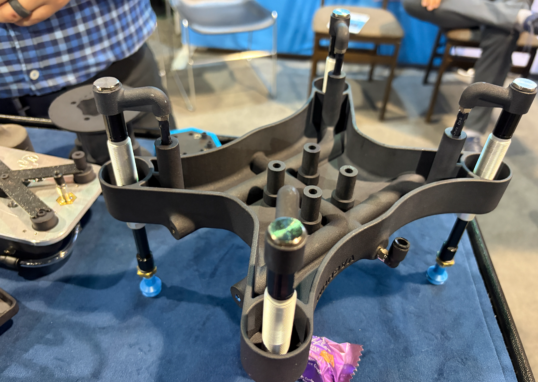
Additive Manufacturing at Scale: 3D Printing the 2026 Economy
- 0
- 173 words
After years of being a prototyping tool, 3D printing (Additive Manufacturing) has officially moved to mass production in 2026, with the global...
Read out all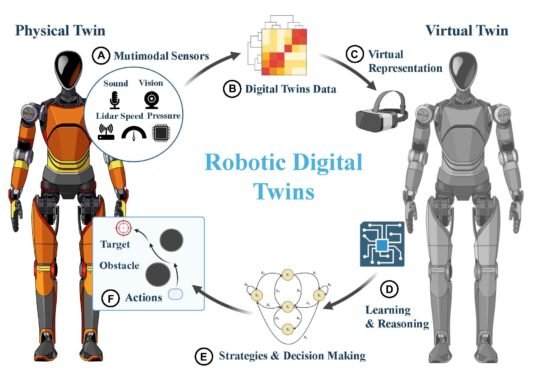
Digital Twin 2.0: From Simulation to Autonomous Decision-Making
- 0
- 181 words
Digital Twins in 2026 have reached “Level 3 Maturity.” They are no longer just 3D models; they are Live Biological Mirrors of...
Read out all