- 0
- 162 words
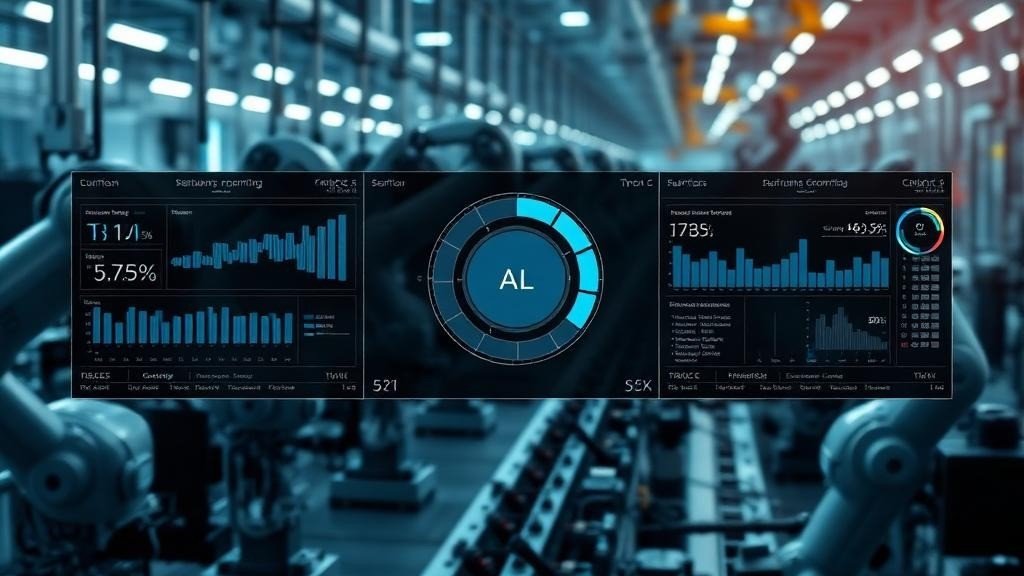
In 2026, “fixing things when they break” is an obsolete concept. Physical AI—the merger of deep learning with physics-based modeling—has made unplanned downtime nearly non-existent.
1. Beyond Traditional Sensors
While old systems looked at “Vibration” or “Heat,” 2026 Physical AI uses “Dual Numbers” and “Jets”—mathematical models that don’t just see change, but understand how that change ripples through a whole machine. It can hear a bearing failing three weeks before a traditional sensor would even trigger an alert.
2. AI-Driven Remanufacturing
When a machine detects its own wear, it doesn’t just call a technician. It communicates with the Additive Manufacturing agent (from Article 9) to print a replacement part and schedules its own repair during a planned shift change, ensuring the line never stops.
3. The Sustainability Dividend
Predictive maintenance in 2026 is a key driver of ESG goals. By ensuring machines run at peak efficiency and extending the life of heavy assets by 20%, companies are significantly reducing their industrial waste and energy consumption.
Author

hq2026host4@gmail.com
Related Posts

The Sovereign AI Trend: Why Nations are Building Their Own LLMs
- 0
- 194 words
By April 2026, the era of relying solely on “Big Tech” for AI is ending. Countries like the Kyrgyz Republic, Saudi Arabia,...
Read out all
6G and the “Internet of Senses”: What to Expect by 2028
- 0
- 167 words
While we are in the peak of the 5G era in 2026, the 6G prototypes being tested today in China and the...
Read out all
The AI Agentic Mesh: How Autonomous Agents Coordinate the 2026 Smart Factory
- 0
- 203 words
In 2024, AI was a tool we used. In 2026, AI is a workforce. The “Agentic Mesh” is a decentralized network of...
Read out all
Human-Cobot Collaboration: The Symbiotic Rise of 2026
- 0
- 169 words
By April 2026, Collaborative Robots (Cobots) have moved beyond simple “pick and place” tasks. They are now industrial-grade partners capable of precision...
Read out all
Additive Manufacturing at Scale: 3D Printing the 2026 Economy
- 0
- 173 words
After years of being a prototyping tool, 3D printing (Additive Manufacturing) has officially moved to mass production in 2026, with the global...
Read out all
Digital Twin 2.0: From Simulation to Autonomous Decision-Making
- 0
- 181 words
Digital Twins in 2026 have reached “Level 3 Maturity.” They are no longer just 3D models; they are Live Biological Mirrors of...
Read out all